
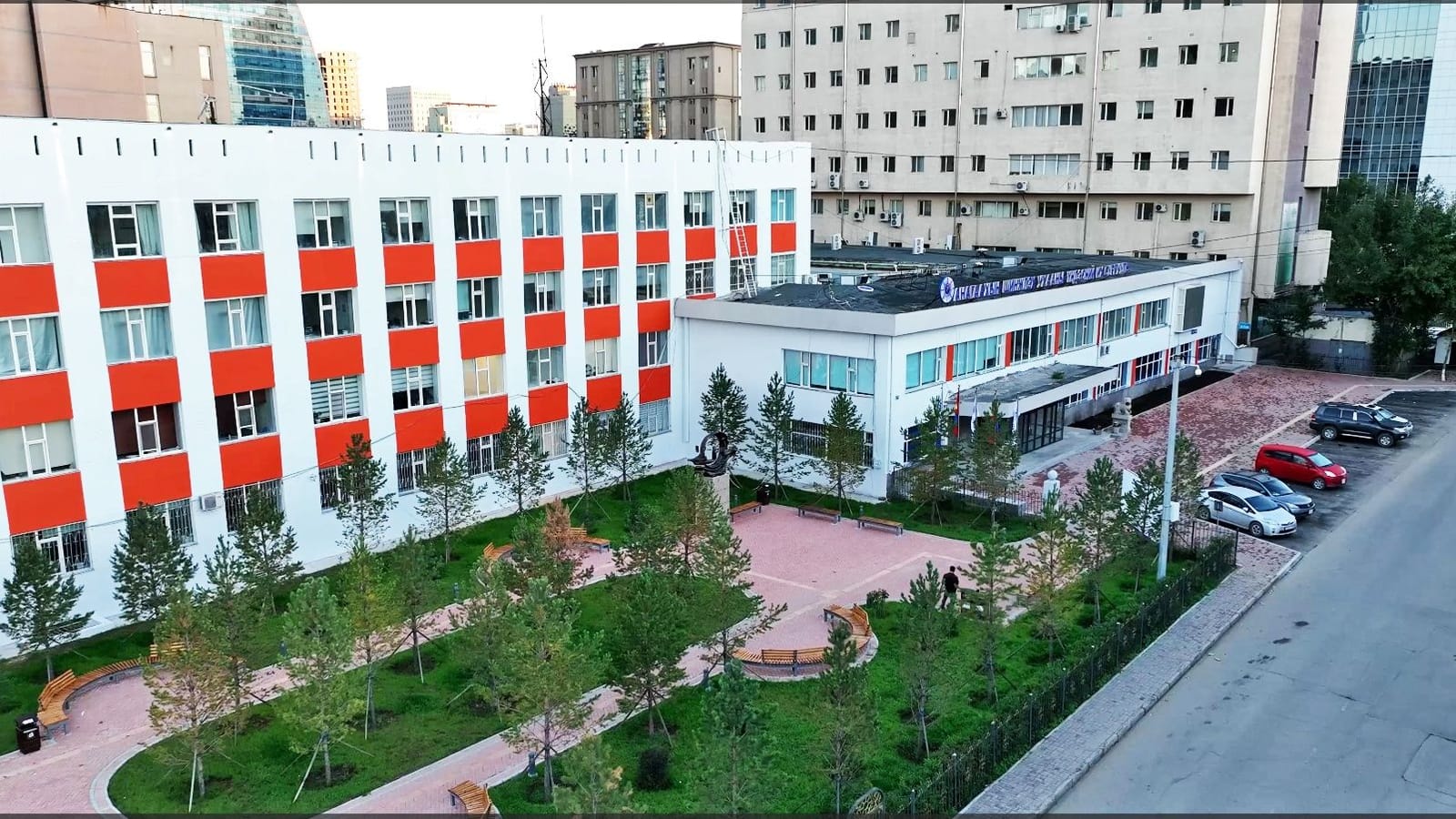
Organizational structure
How the university is governed, and the offices, schools, hospitals, institutes and other units under each vice-rector.
- vice-rectors
- 4
- offices
- 10
- schools
- 8
- institutes
- 3
- hospitals
- 4
- branch schools
- 4
Governance
Units
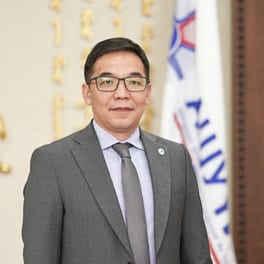
Reporting directly to the Rector
Boldbaatar Damdindorj · Rector
Offices · 3
Monitoring, Evaluation and Internal Audit Office
Conducts monitoring and evaluation of policy implementation and performance plans, and carries out internal audits.
Functions and contacts
Adds value to the university's core work in research, education and public health, ensures compliance with laws and regulations, improves the results of budget spending and provides the university leadership with accurate, objective information.
Main functions
- Monitors and evaluates the implementation of university policy, performance plans and core activities, and issues findings and recommendations.
- Ensures transparency of information on the activities of schools, branch schools and units, and oversees the handling of applications and complaints. Where a dispute remains after a unit head has dealt with a complaint, it organises an inspection by decision of the Rector.
- Checks that financial activities comply with the law and with decisions, assesses the safeguarding and use of state property, and ensures that irregularities are corrected.
- Carries out risk assessments and risk-based internal audits, keeps a risk register and submits risk-mitigation proposals to the Rector.
- Monitors and advises on risk prevention in teaching buildings, dormitories, hospitals, sanatoria and other premises.
- Keeps records of inspections and maintains an electronic database.
Department of Administration and Human Resources
Responsible for policy, strategy, implementation of legislation and human resource management.
Functions and contacts
Supports the effectiveness of the Rector and the Administrative Council, ensures compliance with legislation, strengthens policy-making, planning, reporting and accountability, and builds human-resource management capacity, through open, prompt and transparent information, professional advice and services.
Main functions
- Policy, planning and reporting: drafting and monitoring policies, programmes and plans; annual activity reports, asset and income declarations, reports to the Ministry and the Civil Service Council, and human-resource reports.
- Legal compliance: monitoring compliance with laws and internal regulations and proposing updates; providing the legal basis for the Rector's orders and decisions; registering legal documents.
- Administration and information: preparing, certifying and distributing administrative documents; organising meetings of the Administrative Council; developing the management information database and the HR information system.
Digital Development and Marketing Department
Promotes the image and value of the university and the health sector and is responsible for marketing and digital development.
Functions and contacts
Created in the structure approved by the Governing Board in February 2022 and reporting directly to the Rector; Order A/64 of 16 March 2022 merged the former Marketing Office and the IT Unit into it. Its goal is to raise the public standing of MNUMS and of its scientists, teachers, researchers, physicians, health professionals and staff.
Main functions
- Promoting the reputation of the university and the health sector at home and abroad.
- Preparing and implementing the university's marketing and advertising plans.
- Developing the website, digital channels and information technology, and the "MNUMS Recommends" brand.
- Organising university-wide ceremonies.
- Promoting admissions and organising preparatory activities for applicants.
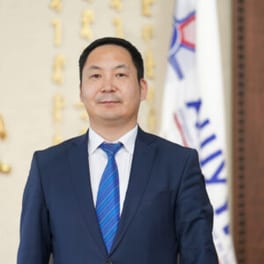
Vice-Rector for Research and International Relations
Tsolmon Bilegtsaikhan
Offices · 2
Department of Science, Technology and Innovation
Will raise scientific research to the international level and support innovation and technological development.
Functions and contacts
Helps faculty and researchers bring their work to international standards. It strengthens research institutes and laboratories, runs research projects and databases, builds and evaluates researcher capacity, and supports technology transfer, innovation and start-up creation with methodological, policy and planning support.
Background
- The Clinical Molecular Diagnostics Centre (BSL-2A) opened on 1 April 2021 and the Institute of Biomedical Sciences was founded on 25 November 2021.
Office of International Relations
We develop cooperation, research and educational exchange with foreign countries and organisations.
Functions and contacts
Develops MNUMS's international cooperation in science, technology, education and health within the university's sustainable-development policy and promotes the university abroad. The university's international ties go back to 1942; the office was expanded in June 2011.
Background
- As of 2022, cooperation agreements with more than 120 institutions in 22 countries (Japan 34, Korea 18, China 17, USA 12, Taiwan 9, Russia 8, Türkiye 5).
- 1978–2022: 195 honorary titles conferred on representatives of 20 countries (37 honorary doctorates, 98 honorary professorships, 60 visiting professorships).
- Partnership with Yonsei University (Korea) since 1993, including faculty and student exchanges.
- The International School of Mongolian Medicine runs joint programmes with Tianjin University of Traditional Chinese Medicine (since 2014) and Tokyo Ariake University (since 2016).
Contact
- int.relations@mnums.edu.mn
- Mon–Fri 08:30–17:30
Institutes · 3
Support units · 2
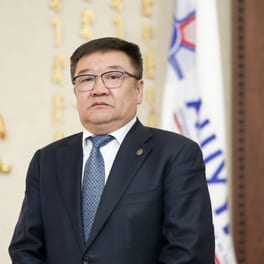
Vice Rector for Academic Affairs
Batbaatar Gunchin
Offices · 2
Department of Academic Policy, Coordination and Quality Assurance
Provides unified management of bachelor's, diploma, master's and doctoral programmes and is responsible for quality assurance in education.
Functions and contacts
Provides unified management of all diploma, bachelor's, master's and doctoral programmes and is responsible for quality assurance. (It brings together the former undergraduate and graduate education policy offices.)
Main functions
- Undergraduate: curriculum development and renewal, quality assurance and accreditation, oversight of teaching technology, timetabling, teaching workload and performance.
- Managing the master's and doctoral programmes (clinical medicine, traditional medicine, public health, dentistry, biomedicine, nursing, pharmacy).
- Organising admission and graduation, updating curricula and taking programmes through national and international accreditation.
- Organising programmes for international students and postdoctoral research aligned with the university's research priorities.
- Tripartite agreements between students, postdoctoral fellows and supervisors; approving pre-defence reviews; registration in the national higher-education information system; transfers.
Contact
- undergraduate@mnums.edu.mn
- graduate.policy@mnums.edu.mn
- 7775 7575 (1015)
- Main teaching building, 3rd floor, room 321
- Mon–Fri 08:30–17:30
Office of Faculty and Student Development
Organises and supports faculty development, e-learning and all student-related activities from admission to graduation.
Functions and contacts
Responsible for continuous professional development of faculty, e-learning, and all student-related activities from enrolment to graduation. The Student Culture Centre, Student Eco Centre, student self-governing bodies, associations, clubs and councils operate under it. (It brings together the former student development and faculty development / e-learning offices.)
Main functions
- Faculty development: the Faculty Development Programme (first approved by Order A/259 of 2021); recruitment, a 5-module induction course and teaching certificate for new faculty, mentoring; faculty evaluation, academic ranks, workload, faculty database, fellowships and exchanges; training in teaching methods and educational research.
- E-learning: development and continuity of the eMNUMS learning platform and mobile app; guidance on blended teaching; student e-mail accounts (@gt, @pt, @st.mnums.edu.mn); multimedia studio, video-lecture library and online conference room.
- Student development: student services, records and certificates; student research, clubs, arts and sports; health check-ups, psychological support and support for students with disabilities.
- Loans, grants and scholarships, the career centre, dormitory conditions and support for international students.
Schools · 8
Branch schools · 4
Secondary school · 1
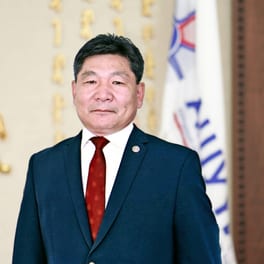
Vice Rector for Hospital Affairs
Dalkhyn Tserendavga
Offices · 1
University Hospital Development Office
We will develop a university hospital system that provides integrated training, research and healthcare services.
Functions and contacts
Mission: to build in Mongolia a university-hospital system with the most capable physicians, teachers, researchers, nurses and health professionals, delivering education at all levels, research and health care in an integrated way.
Main functions
- Preparing and implementing policy documents aligned with national health, education and science policy.
- Improving the quality, access and safety of care, adopting advanced diagnostics and treatment, and setting diagnostic and treatment priorities.
- Taking part in national prevention programmes, health education and screening.
- Supporting the hospitals through national and international accreditation.
- Developing hospital-based training so that the hospitals become teaching institutions.
- Methodological support for research, IT and financial planning; continuous training of managers, physicians and professionals, and workforce stability.
- Preparing and running projects for management development and technological renewal.
Contact
- hospital.development@mnums.edu.mn
- Mon–Fri 08:30–17:30
Hospitals · 4
Centres · 1

Vice-Rector for Finance and Economics
Khorolsuren Lkhagvasuren
Offices · 2
Department of Finance and Economics
Ensures the financial and economic conditions for teaching, research and clinical activities.
Functions and contacts
Creates the financial conditions for uninterrupted teaching, research and clinical services in line with the university's mission and strategy, strengthens the material base and safeguards university assets.
Main functions
- Preparing plans based on economic return and preventing arrears.
- Contributing to budget preparation, executing the approved budget and recording spending accurately.
- Preparing and analysing financial statements and managing accounting.
- Giving staff and students fast, hassle-free service.
Contact
- finance@mnums.edu.mn
- +976 11 329077
- Main teaching building, 2nd floor, room 256
- Mon–Fri 08:30–17:30
Supply and Services Office
Organises tenders, procurement, maintenance and material supplies.
Functions and contacts
Provides a comfortable environment for staff and students to work, study and live; handles repairs and technical upgrades, procures and distributes equipment, materials and services, and safeguards university property.
Main functions
- Organising tenders and procurement under the Public Procurement Law and ensuring that contracts are fulfilled.
- Inspecting, receiving and storing deliveries, and purchasing on request of schools and offices.
- Preparing the annual investment and major-repair plan for approval, and the procurement plan and reports.
- Routine repair and cleaning of teaching buildings and dormitories.
- Running lease tenders and monitoring tenants.
Contact
- service@mnums.edu.mn
- +976 11 312003
- Main teaching building, 2nd floor, room 222
- Mon–Fri 08:30–17:30
Support units · 1
Each school and branch school has its own departments, divisions, laboratories and professor teams.